Are We Making Things Worse Election Denialism and Security Research
This recording is not on YouTube. It plays from the DEF CON media server; the button opens the file there.
Where
Voting Village
DEF CON 34
Duration
26 min
Election security panelists examine how vulnerability research gets misread as proof of stolen votes, and how experts can communicate findings without eroding public trust.
Summary
This Voting Village panel, moderated by a DEF CON board attorney, brings together Michael Moore, Arizona's Secretary of State chief information security officer, statistics professor Philip Stark, and Jeff Hail of the Center for Democracy and Technology, a former CISA election security official. The opening question asks how a vulnerability differs from proof that an election outcome was wrong. The panelists agree the two are distinct: a weakness existing does not mean anyone exploited it. They argue the larger problem is communication, because the public often hears a vulnerability as incompetence or as evidence of theft, and partisan framing makes that worse.
The discussion then moves to trust and relationships. Stark described auditing a 2021 New Hampshire election that drew hostile reaction and threats, and said a reporter's advice helped him explain technical problems in ways that did not inflame people. Several speakers warned that technical complexity is often used as a stand-in for authority, and that security experts should step in when claims misrepresent their data. The conversation also covered audits: a paper trail that cannot be trusted makes any audit or recount meaningless, and post-election audits often happen under time pressure before certification.
The closing message is that imperfections should be acknowledged rather than hidden, but never overclaimed. Panelists urged practitioners to speak with legislators, to focus spending on risks that have been measured, and to build agreement on a few shared facts before debating remedies. For anyone working on elections or on disclosure, the takeaway is that accurate, plain-language explanation is part of the security work.
Materials
Related talks
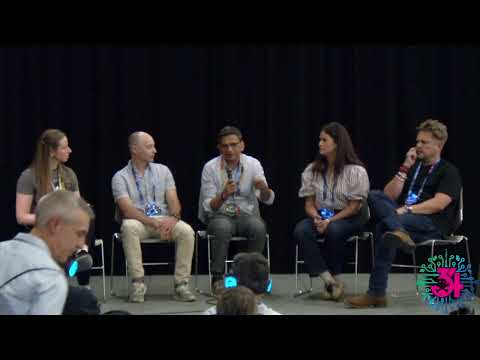
Payment Village·42 min
Jorge Braniff · Sanjeev Sharma · Monique Garcia · Daniel Cuthbert
Panelists from payments, fraud and security research discuss how AI agents will reshape buying, fraud risk, identity checks and trust in payments.
Voting Village·46 min
Barbara Simons
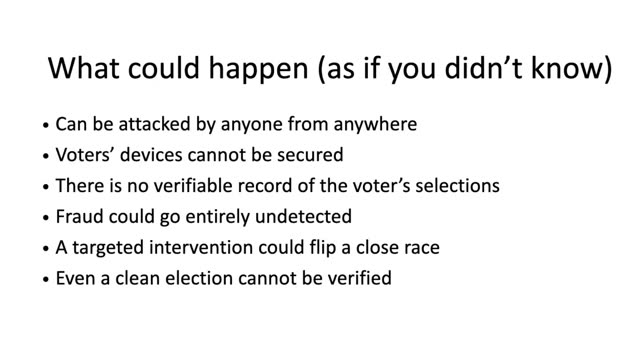
Makes the case that internet voting cannot be secured or verified, using past pilot breaches, failed trials and expert reviews as evidence.
Voting Village·29 min
Carsten Schürmann
Argues that differences between voting channels, such as internet and mail-in ballots, can be weaponized to erode public trust in election results.