Black Hat·54 min
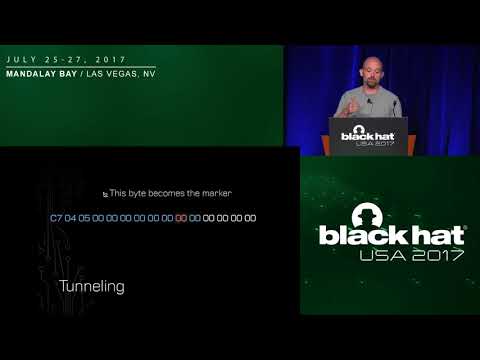
Industry experts analyze emerging threats surrounding Bochspwn Reloaded: Detecting Kernel Memory Disclosure with x86 Emulation and Taint Tracking.
kernelx86emulation+1
36 talks tagged with this topic.
Loading filters…
1–24 of 36 talks · loading…
Black Hat·54 min
Industry experts analyze emerging threats surrounding Bochspwn Reloaded: Detecting Kernel Memory Disclosure with x86 Emulation and Taint Tracking.
Black Hat·44 min
Presenters detail vulnerability discovery and exploitation in Breaking the x86 Instruction Set.
Black Hat·51 min
Security researchers examine technical aspects of GOD MODE UNLOCKED - Hardware Backdoors in x86 CPUs.
Black Hat·10 min
Security researchers examine technical aspects of GOD MODE UNLOCKED - Hardware Backdoors in x86 CPUs.
Black Hat·52 min
Presenters detail vulnerability discovery and exploitation in Intra-Process Memory Protection for Applications on ARM and X86: Leveraging the ELF ABI.
Black Hat·44 min
Analysts investigate attack surfaces and defenses concerning MoRE Shadow Walker: The Progression of TLB-Splitting on x86.
Black Hat·47 min
Industry experts analyze emerging threats surrounding The Memory Sinkhole - Unleashing An X86 Design Flaw Allowing Universal Privilege Escalation.
IEEE Symposium on Security and Privacy·15 min
Engineers explore architecture and security mechanisms for PLATYPUS: Software-based Power Side-Channel Attacks on x86.
Main Stage·45 min
Christopher Domas
Christopher Domas demonstrates how software-controlled microarchitectural stresses induce transient hardware faults to achieve cross-ring privilege escalation.
nullcon·56 min
Presenters detail vulnerability discovery and exploitation in Goa 2018:- Expanding Exploitation Beyond X86 And ARM.
PROIDEA Events·41 min
Jakub Słociński
Security researchers examine technical aspects of PLNOG19 - Jakub Słociński - Wieloprocesorowa platforma x86 a wydajny routing sieciowy.
The Linux Foundation·39 min
John Hawley
Examines building Interesting and Complex Robotics Using x86 Computers and evaluates key implications for security practitioners.
The Linux Foundation·50 min
Darren Hart · Intel Open Source Technology Center
Presents how Not to Write X86 Platform Drivers and evaluates key implications for security practitioners.
The Linux Foundation·37 min
Presents LF Live Webinar: Graviton2 Arm vs Intel x86 and evaluates key implications for security practitioners.
The Linux Foundation·23 min
Shivansh Dhiman · AMD India
Presents meet FRED: The Future Face of X86 Event Processing and evaluates key implications for security practitioners.
The Linux Foundation·22 min
Jason Chen
Analyzes supporting TEE on x86 Client Platforms with pKVM and evaluates key implications for security practitioners.
The Linux Foundation·40 min
David Kaplan
Investigates upcoming x86 Technologies for Malicious Hypervisor Protection and evaluates key implications for security practitioners.
The Linux Foundation·48 min
Wenlong Hou · Ant Group
Explores X86/Pie: Make Kernel Images Virtual Address Flexible and evaluates key implications for security practitioners.
CONFidence·37 min
Dominik Czarnota
Security researchers examine technical aspects of Dominik Czarnota: Linux privesc via arbitrary x86 MSRs read/write bug: case study from CTF challenge.
DEFCON Switzerland·47 min
Ange Albertini
Presenters detail vulnerability discovery and exploitation in #days: Ange Albertini: Such a weird processor - messing with x86 opcodes.
Hack In The Box Security Conference·56 min
Christopher Domas
Christopher Domas explores #HITBGSEC 2018 D1: God Mode Unlocked: Hardware Backdoors In x86 CPUs.
Hack In The Box Security Conference·33 min
Alexander Ermolov
Alexander Ermolov explores #HITBGSEC D2: Bypassing Hardware-Based Trusted Boot Through x86 Downgrade.
Black Hat USA·24 min
Tianxiang Li · Wenqiang Li · Zhibo Liu · Shuai Wang · Xiaofei Xie · Yuanyuan Yuan
Presenters detail vulnerability discovery and exploitation in BTD: Unleashing the Power of Decompilation for x86 Deep Neural Network Executables.
Main Stage·37 min
Mathias Krog · Christian Skovsende
Reverse engineers Intel CPU microcode on Goldmont cores, achieving persistent userspace microcode patching on Linux to create hardware backdoors in x86 execution.