You are not a Digital Native and that's OK
Digital literacy and technology education for the next generation.
Summary
### Deconstructing the "Digital Native" Fallacy At 00:00, acclaimed science-fiction author, activist, and journalist Cory Doctorow takes the stage at r00tz Asylum to deliver a thought-provoking keynote. Doctorow begins by dismantling the widespread cultural myth of the "digital native"—the assumption that because young people were born into a world saturated with smartphones and touchscreens, they automatically possess an innate understanding of technology. Doctorow argues that being surrounded by commercial gadgets does not make one technologically literate any more than living near a highway makes one an automotive mechanic.
### Walled Gardens vs. General-Purpose Computing At 05:20 and 10:36, Doctorow contrasts the open computing architecture of early personal computers with the locked-down "walled gardens" of modern mobile ecosystems. Proprietary app stores, locked bootloaders, and corporate digital rights management (DRM) are deliberately engineered to prevent users from inspecting, modifying, or repairing their own devices. Doctorow warns that when technology corporations control what software can be executed, users are reduced from autonomous technology owners to passive digital consumers.
### Packet Inspection and the Architecture of the Internet At 13:15, Doctorow explains the vital importance of learning how the internet actually works. He emphasizes that the fundamental protocol design of the internet—an open, decentralized network of general-purpose computers passing packetized data—is inherently democratic. He encourages youth to look beneath slick graphical interfaces by learning to program, inspecting network packets, and understanding how data routes across global infrastructure.
### The Politics of Technology and Digital Rights At 16:40, the presentation explores the political and legal dimensions of computer security. Doctorow references the r00tz Code of Ethics, explaining that technical knowledge carries immense civic responsibility. He discusses how corporate monopolies and governmental surveillance apparatuses leverage opaque technology to monitor citizens, suppress competition, and curtail free speech, emphasizing that understanding computing is essential for defending civil liberties.
### Reclaiming Technological Agency and Empowerment Concluding between 18:20 and 19:41, Doctorow delivers an inspiring call to action for the next generation. He tells the young audience that it is completely acceptable not to know everything today, but urges them to never accept the passive role assigned to them by technology conglomerates. By learning to code, reverse-engineer hardware, and question technical authority, young hackers can build open systems that preserve human freedom.
(AI summary — Gemini 3.8 Flash)
Related talks
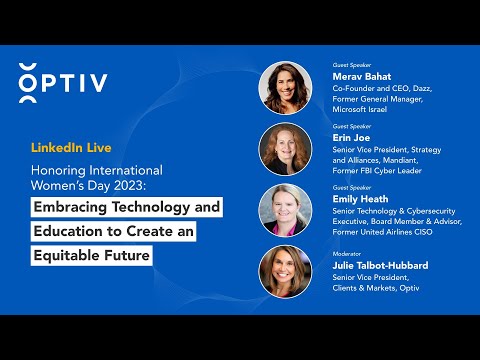
Optiv·1 hr 2 min
Embracing Technology and Education to Create an Equitable Future.

Fortinet·5 min
Education Technology
Presenters detail vulnerability discovery and exploitation in Security Awareness Curriculum | Education Technology.

Village Interviews·< 1 min
No Starch Press Team
The DEF CON Video Team drops by the No Starch Press booth to see the latest computer security titles and publications released at DEF CON 34.