The Hip Hacker's Guide to Policy
Where
I Am The Cavalry
BSides Las Vegas
Duration
57 min
Walks through how US policy is made and how hackers can influence it, plus recent legal changes for security research.
Summary
A panel from the I Am The Cavalry track at BSides Las Vegas 2022 set out to explain how policy gets made, starting with a simplified tour of the three branches of the US government. The speakers described how Congress writes laws, how regulatory agencies create rules through public comment, and why executive orders depend on existing statutory authority. They argued that influence is possible at several points in this cycle, including committee staff, rulemaking comments, and coordinated letters that gain weight when many organizations sign on.
The middle of the session covered legal protections for security research. The panel traced how the DMCA exemption for research was created and renewed through the Library of Congress process, and how the Department of Justice later issued guidance telling federal prosecutors to decline good-faith research cases under the computer fraud statute. They also discussed vulnerability disclosure policies as a practical way for organizations to authorize testing, and noted that state laws differ. The IoT Cybersecurity Improvement Act and newer federal reporting and zero trust efforts were presented as signs of a growing government appetite for cybersecurity regulation.
The takeaway for practitioners is that framing matters. Legal arguments focus on conduct and research outcomes rather than on whether someone calls themselves a researcher. Specific, technical comments on draft language are more useful to policymakers than general opposition, and state-level developments are worth sharing through community channels. The panel acknowledged that defining good faith remains hard and encouraged the community to help articulate norms for responsible research.
Related talks

I Am The Cavalry·1 hr
Stacey Higginbotham · Silas Cutler · Paul Roberts
Examines how end-of-life routers, smart devices and industrial gear leave unpatched risks threatening public safety.

I Am The Cavalry·1 hr
Casey J. Ellis · Steve Kelly · Sick.Codes
Panelists discuss how market concentration, weather and cross-sector dependencies make food and agriculture vulnerable to cyber risk.
Policy Village·22 min
Katharina Sommer
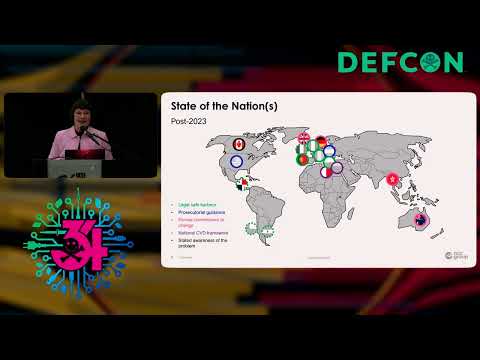
Compares how countries legally protect security researchers and distills a minimum viable safe harbour checklist for policymakers.