Social Steganography: Sending Messages in the Clear for Fun and Nonprofit
Where
Talks
A New HOPE
Duration
44 min
Shows how selective truths and ambiguous wording can shape messages in public, using state wiretap and recording laws as examples.
Summary
The talk opens with the idea that persuasion works through what is left out as much as what is said, and that a message posted openly can be read very differently by different audiences. The speaker introduces social steganography as writing that is understood by readers who share context while others miss its meaning, and argues that many people wrongly assume public speech is safe from misreading or legal consequence.
The middle section goes through practical rhetorical habits: staying deliberately ambiguous, telling selective truths, being specific when addressing a particular audience, and escalating quickly with facts when someone misreads on purpose. These are tied to legal questions, including two-party consent recording laws in several US states, truth as a defense against libel, and how a Pennsylvania constitutional clause and a computer-crime statute might apply to scraping and good-faith security testing. The speaker also covers how weaknesses in carrier signaling (SS7) and older mobile encryption make phone calls less private than people assume, and why routing Tor through a VPN can undermine anonymity.
The talk ends with an open question-and-answer session. The speaker notes that some techniques were left out of the presentation, and invites further discussion of censorship circumvention, encryption and privacy. The practical takeaway is to assume a message may reach audiences the author did not intend, and to check the legal context of recording and system access before acting.
Related talks

Talks·18 min
Libby Liu
Explores the risks and barriers faced by technology company insiders who report wrongdoing to outside parties.
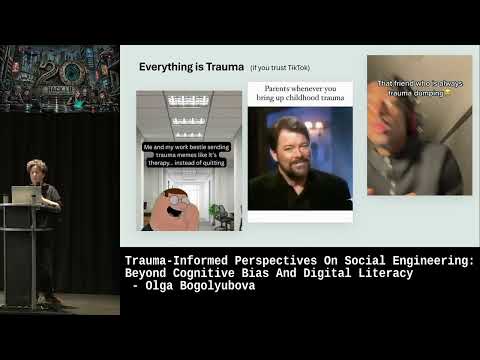
Talks·28 min
Olga Bogolyubova
Argues that trauma and attachment research can explain social engineering vulnerability better than cognitive bias models.

Talks·43 min
Markus Hölsä
Traces how EU chat control and high-level group proposals could erode end-to-end encryption and user privacy.