Retro Exploitation: Vintage Computing as a Vulnerability Research Playground
Wesley McGrew uses Commodore Amiga 16/32-bit vintage computing environments to teach foundational reverse engineering and exploit development using Ghidra.
Summary
Lowering the Barrier to Exploit Development
Modern operating systems feature multi-layered exploit mitigations—such as ASLR, DEP, and CFG—that create an intimidating learning curve for aspiring vulnerability researchers.
Setting Up a Commodore Amiga Research Environment
Wesley McGrew demonstrates how vintage 16/32-bit platforms like the Commodore Amiga provide an accessible, mitigation-free playground for mastering low-level systems concepts.
Reverse Engineering AmigaOS Binaries with Ghidra
Configuring modern Ghidra disassemblers and native Amiga debuggers enables researchers to analyze assembly code, memory layouts, and stack structures in legacy applications.
Case Study: Exploiting a 1994 Amiga FTP Client
A step-by-step case study details the discovery and exploitation of a buffer overflow in a 1994 Amiga FTP client, demonstrating classic stack exploitation principles.
Related talks
Main Stage·38 min
Joseph Gabay
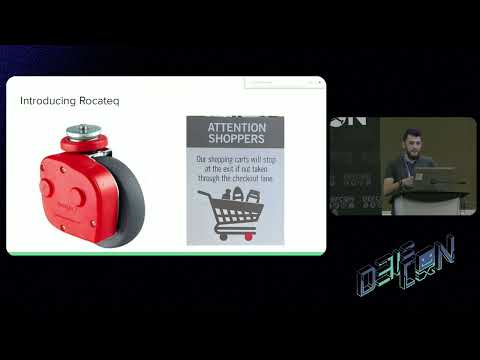
Reverse engineers electronic shopping cart containment wheels, capturing ultra-low-frequency and 2.4 GHz RF signals to unlock wheel braking mechanisms.

Main Stage·43 min
Bramwell Brizendine · Austin Kersten · Max Hince
Dr. Bramwell Brizendine introduces SHAREM, an advanced shellcode emulation framework providing complete code coverage and flawless Ghidra disassembly.

Main Stage·46 min
Cesare Pizzi
Cesare Pizzi uses NSA Ghidra and custom 6502 plugins to reverse engineer vintage Commodore 64 malware, uncovering surprising polymorphic complexity.