Practical Exploitation of DoS in Bug Bounty
Examines techniques for discovering high-impact Denial of Service flaws in bug bounties through N+1 database queries, GraphQL abuse, and cache poisoning.
Summary
Denial of Service in Bounty Programs
Denial of Service (DoS) vulnerabilities disrupt application availability by exhausting server resources or exploiting architectural flaws. While often overlooked, demonstrating reproducible application DoS can yield significant bounty rewards.
N+1 Queries and Database Exhaustion
Applications that generate redundant database queries for individual user requests are vulnerable to N+1 query amplification attacks. Crafting requests that trigger thousands of unnecessary queries causes severe database latency and application crashes.
GraphQL Query Complexity and Cache Poisoning
Unconstrained GraphQL endpoints can be forced to resolve deeply nested or circular queries that consume excessive CPU and memory resources. Furthermore, web cache poisoning manipulates cached responses to serve errors or denial-of-service states to all subsequent users.
Responsible Testing and Reporting
Assessing DoS vulnerabilities requires careful testing to avoid impacting production availability. Reports must clearly demonstrate mathematical resource consumption without causing operational outages.
Related talks

Creator Stage·25 min
Whit Taylor
Uncovers client-side gadgets, race conditions, and business logic flaws hidden within referral and reward systems across major bug bounty programs.

Creator Stage·51 min
Justin 'Rhynorater' Gardner
Recounts high-severity bug bounty discoveries from live hacking events, detailing complex chains from SQL injection to remote code execution.
Creator Stage·52 min
Daniel 'Blaklis' Le Gall
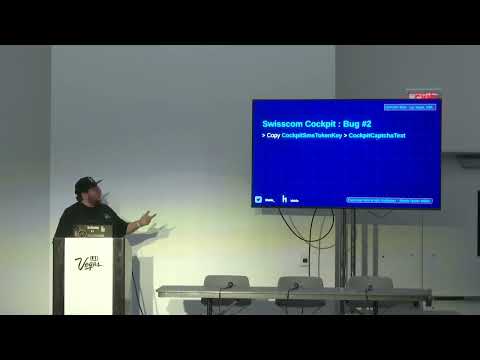
Recounts intriguing bug bounty stories ranging from simple logic errors to chaining CAPTCHA weaknesses to break sensitive application encryption.