Leaks and Hacks: Four Years of DDoSecrets
Where
Talks
A New HOPE
Duration
55 min
Explains how the DDoSecrets collective collects, publishes and vets leaked datasets, and the ethical trade-offs involved.
Summary
The speakers from DDoSecrets, a transparency collective founded in 2018, review the group's first four years of publishing leaked and hacked data. They trace its path from early Russian and government datasets to large releases such as BlueLeaks, the Parler archive, ransomware leak-site scrapes and, more recently, material linked to the war in Ukraine. Most of the archive is public, while sensitive sets go only to vetted researchers and journalists under limited distribution. A search index helps people find which dataset holds a given keyword.
The middle of the talk focuses on the practical difficulty of working with huge, unstructured leaks. Newsrooms often lack the staff or training to go through terabytes of files, and records can depend on local language, slang and institutional knowledge that a small volunteer group cannot supply. One example is a police-related dataset that arrived as a web application database, spreadsheets and PDFs, which had to be reconstructed before reporters could use it. The presenters also cover ethical questions around personal information, armed conflict and state-linked sources, and explain why they avoid giving any single outlet exclusive access.
In the questions, the speakers discuss how the group decides whether material is in the public interest, how outside researchers can request limited-distribution access, and how they manage safety and legal threats through redundancy and shared responsibility. The takeaway for practitioners is that large leak archives only become useful when someone invests in verifying and contextualizing them, and that publication choices shape both risk and impact.
Related talks
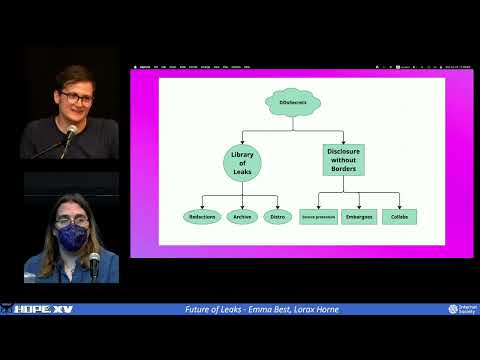
Talks·48 min
Emma Best · Lorax Horne
Explains how a leak-publishing collective vets, releases and protects sensitive datasets, and the pressures it faces.
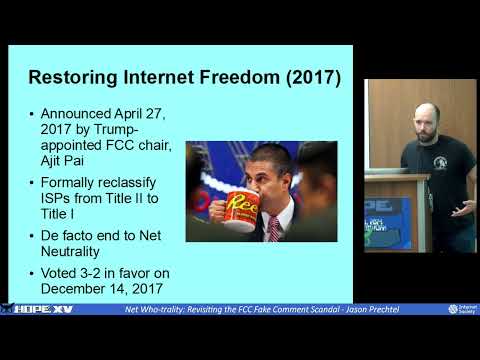
Talks·39 min
Jason Prechtel
Traces how public records requests and server logs were used to identify who submitted millions of fake net neutrality comments.

Talks·52 min
Amelia Szczuchniak
Traces a stolen NFT theft from blockchain transactions to a real suspect, and shows why police often cannot act on it.