Hardening Containers with Seccomp: Hands-On Profiles, Pitfalls, and Real Exploits
Where
Ground Floor
BSides Las Vegas
Duration
49 min
Shows how seccomp syscall filters can contain a live container exploit and how to generate profiles from observed behavior.
Summary
Seccomp is a Linux kernel feature for filtering system calls, dating back about two decades. The speaker traces its origins to sandboxing browsers, then to container runtimes that adopted a simpler JSON profile format. Docker applies a default profile, while Kubernetes initially left seccomp off, so most clusters rarely use it. The main obstacle is that developers often cannot say which system calls their applications need.
A live comparison showed an unconfined NGINX container able to create namespaces and access the kernel keyring, while a container with the default profile was blocked from both and kept serving traffic. The main case study targets a server-side template injection flaw in a change-detection application that leads to code execution and theft of a Kubernetes service account token. An eBPF-based node agent recorded the syscalls the workload made, and those were converted into an application profile and applied to the deployment. When the exploit was replayed, it failed partway through because it needed a call the profile did not allow.
The closing discussion covered trade-offs. Profiles are blunt, can break functionality if observed behavior is incomplete, and may record malicious activity during learning, so generating them in staging and reviewing them in version control was advised. Alternatives such as AppArmor, SELinux and Landlock are harder to fit into containers. The speaker also argued that seccomp can extend the patching window for known CVEs, though its effect on any given vulnerability is not guaranteed.
Related talks
Proving Ground·24 min
Jimmy Shah · Matthew Brown
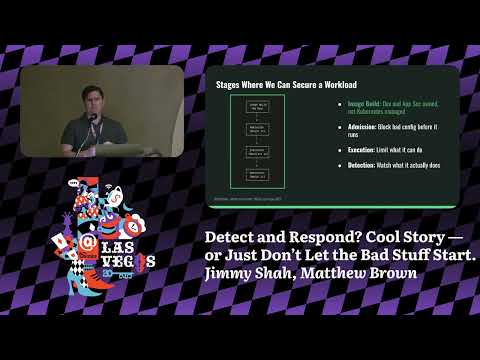
Shows how admission policies and runtime enforcement can stop a Kubernetes container compromise before an attacker gains a foothold.

Security BSides San Francisco·43 min
Examines BSidesSF 2026 - Sandboxes, Seccomp, and Syscalls: Chasing Isolation in Kubernetes (Mark Manning) and evaluates key implications for security practitioners.

Kaspersky·6 min
Analysts investigate attack surfaces and defenses concerning How to configure scanning Docker containers in Kaspersky Endpoint Security for Linux.