Hacking Biohacking and the Future of Humanity
Richard Thieme explores hacking biohacking and the future of humanity at DEF CON 17, examining threat-intelligence and practical defenses.
Summary
Architecture and Background
Hacking, Biohacking, and the Future of Humanity Richard Thieme ThiemeWorks I was asked in 2006 at AusCert in Australia, my second of three years of keynoting, where did I see hacking headed in the future? I described biohacking and noted that genetic engineering, neuroscience (both black and white R&D) and the availability of everything one needs for a few thousand bucks to hack the genome in a garage, all made hacking human attributes and identity the next level of the transformation of human possibility.
Vulnerability Analysis
This talk illuminates how current and future developments in information systems, robotics, biotechnology, nanotechnology, and the colonization of the solar system through telerobotic and human exploration, all suggest ways human identity will be hacked and enhanced. The evolution of post-human identity is in our hands.
Exploitation and Demonstrations
This talk sounds like science fiction but isn't. It delivers profound insights into the next chapter of human civilization.
Remediation and Defensive Strategies
Richard Thieme (www.thiemeworks.com) is an author and professional speaker focused on the deeper implications of technology, religion, and science for twenty-first century life. For copies of the slides and additional materials please see the DEF CON 17 Archive here:
Related talks

Main Stage·42 min
Michael Ligh · Matthew Richard
Michael Ligh and Matthew Richard explores making fun of your malware at DEF CON 17, examining threat-intelligence and practical defenses.
Main Stage·41 min
Matt Richard · Steven Adair
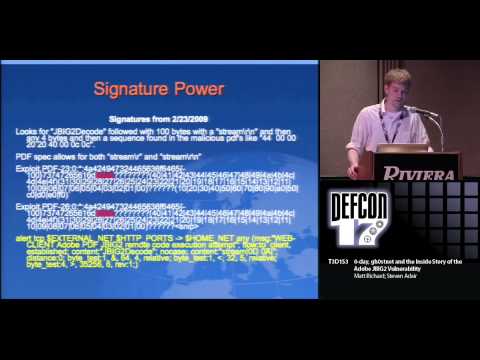
Matt Richard and Steven Adair explores 0-day gh0stnet at DEF CON 17, examining threat-intelligence and practical defenses.

Main Stage·41 min
Mark Ryan Del Moral Talabis
Mark Ryan Del Moral Talabis explores dangerous minds the art of guerrilla data mining at DEF CON 17, examining threat-intelligence and practical defenses.