Fortress Island: Physical Security in Voting Systems
Reviews publicly documented physical security controls and tamper-evident seals on deployed voting systems, exposing critical weaknesses in hardware defenses.
Summary
Physical Security as a Core Voting System Defense
Voting system architectures rely heavily on keyed physical locks, tamper-evident seals, and serialized security tape to scope voter interaction in semi-private voting booths to intended, safe operations.
Flaws in Hardware Access Controls and Port Isolation
Drew Springall analyzes vendor specifications, jurisdictional manuals, and field deployment reports, demonstrating how standard keyed locks and insecure access panels leave critical I/O ports, administrative interfaces, and memory storage slots accessible to voters.
Limitations of Tamper-Evident Seals
Relying on procedural seal verification as a sole mitigation for known electronic vulnerabilities is fundamentally flawed due to inconsistent inspection training and non-destructive seal bypass techniques.
Recommendations for Resilient Voting Hardware
Securing voting equipment requires eliminating shared mechanical keyways, implementing hardware-enforced port disablement, and pairing physical inspections with cryptographic vote verification.
Related talks

Main Stage·42 min
Mark Omo · James Rowley
Reverse engineers electronic gun safes and commercial digital vaults, demonstrating effortless physical and electromagnetic bypasses across leading brands.
Main Stage·40 min
Dennis Giese · braelynn
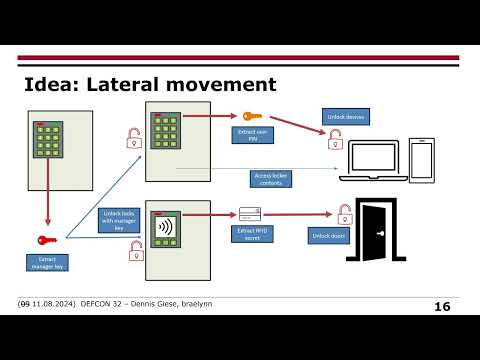
Security evaluation and hardware attack surface analysis of smart electronic lockers and storage cabinets.

DCGVR Village·32 min
Using unique optical patterns of glitter nail polish to create uncloneable, low-cost physical tamper-evident seals against Evil Maid attacks on laptops and screws.