Every Contact Leaves a Trace
Where
Track 2
CactusCon 12
Duration
52 min
Traces how stolen-device recovery and photo metadata uncovered organized crime, and how the same methods threaten privacy.
Summary
Ken Westin opens with the idea that a crime almost always leaves something behind, and that modern life produces a steady stream of records, from Wi-Fi connections and carrier logs to images and breached data that no one fully controls. He describes how his work began with a USB tool that reported on the devices it ran from, which he built to help a company block data theft and then turned toward recovering stolen equipment.
The middle of the talk walks through the cases. A device agent helped recover gear for a university, a thermal camera maker and a school district, and a laptop tracker that captured webcam photos and Wi-Fi-based location led to a fencing operation and a Russian crime group. Later work covered phone tracking, where photos carried better GPS data than the carrier-style location polls, and a search engine for camera serial numbers stored in EXIF metadata, built by mining billions of photos from Flickr and other sites. Other examples included a photographer's own posts giving away his location, and a staged smart home test that showed how default Wi-Fi passwords exposed cameras.
He closes by arguing that the same techniques serve stalkers, authoritarian governments and commercial spyware vendors, so investigators need to think hard about who receives the data. He recommends reducing your own digital footprint, handing evidence to law enforcement rather than acting alone, and relying on community collaboration when an investigation stalls.
Related talks
Talks·39 min
Jason Prechtel
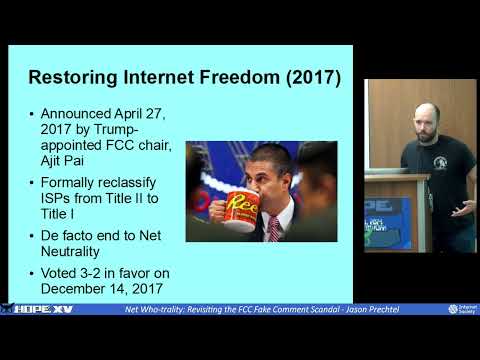
Traces how public records requests and server logs were used to identify who submitted millions of fake net neutrality comments.

Talks·52 min
Amelia Szczuchniak
Traces a stolen NFT theft from blockchain transactions to a real suspect, and shows why police often cannot act on it.

Talks·23 min
Luke Berndt
Shows how passive listening to encrypted public safety trunked radio systems leaks metadata about talk groups and radio activity.