Enshittification: Why Everything Suddenly Got Worse and What to Do About It
Where
Talks
HOPE XV
Duration
1 hr 51 min
Explains how digital platforms decline in quality, why it happened now, and which policy levers could reverse it.
Summary
Cory Doctorow opens by defining enshittification, the term he coined, as a three-stage decline: a platform first serves its users, then shifts value to business customers, and finally takes everything for itself. He uses Facebook as a case study, showing how users, advertisers and publishers became locked in, and how organic reach was throttled to force payment. The mechanism, he says, is software's ability to adjust pricing, rankings and payouts in rapid, small steps, much like the algorithmic pay cuts experienced by rideshare drivers.
To explain why many firms declined at once, he argues that four constraints once disciplined companies: competition, regulation, self-help interoperability and worker power. Antitrust enforcement lapsed, consolidation followed, and laws such as the DMCA made building tools that work around platforms a legal risk. Tech workers lost leverage as their scarcity faded and layoffs spread.
On remedies, he points to renewed competition enforcement, the EU's Digital Markets Act and Digital Services Act, Oregon's right-to-repair law, and a push for US federal privacy legislation. In the question session he suggests standards paired with safe harbors for reverse engineering, and portability rules so users can take their social connections elsewhere. He ends that the trajectory is not fixed and can be changed by deliberate action.
Related talks

Talks·1 hr
Roel Schouwenberg
Traces how shifts in media shape politics and culture, and how encryption and AI policy proposals fit into that picture.
Talks·48 min
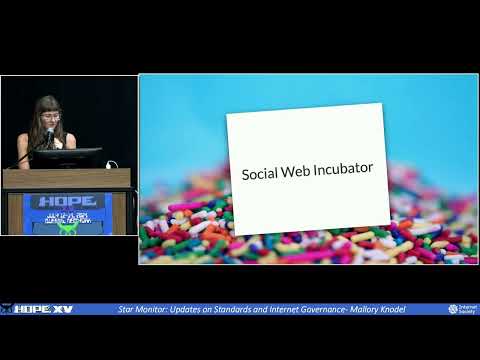
Mallory Knodel
Surveys recent developments at ICANN, IETF, IEEE, W3C and ITU through a human rights lens, focusing on censorship and privacy.

Talks·54 min
Alessandro Polidoro
Traces a European legal campaign against porn platforms under data and platform rules, alongside research on image-based sexual abuse.