DIY Geoengineering
Where
Talks
HOPE XV
Duration
51 min
Explains how stratospheric sulfur balloons could offset warming, along with their cost, regulation and side-effect trade-offs.
Summary
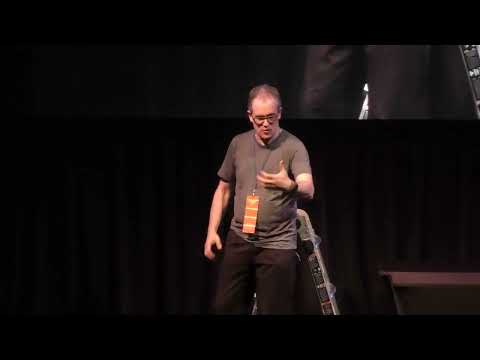
The talk opens with the state of the climate: warming already locked in, annual emissions still rising, and many voluntary carbon offsets doubtful. The speaker, who founded a small startup, frames solar geoengineering as a hackable problem. He traces his interest to a science fiction novel and then to the research literature, where stratospheric aerosol injection is the most studied option and most other proposals fail on physics or economics.
The middle of the talk covers his home-built experiments. He describes launching latex balloons carrying reflective material into the stratosphere, tracked with cheap GPS units, and how the early setup, which involved burning sulfur indoors, gave way to buying sulfur dioxide by the tank and using larger balloons. He defines a unit called a cooling credit, equal to offsetting the warming from one ton of CO2 for one year, and explains why the particles last only a few years, so the measure is in ton-years. He also covers the reporting rules for aviation and weather agencies, and the cost gap between small hobby launches and industrial scale.
In the question period, the audience pressed him on acid rain, litter from balloons, ecological harm, and whether geoengineering distracts from cutting emissions. His answers stressed uncertainty and the lack of research on the stratosphere. The takeaway is that the mechanics and costs are cheap enough for a small team to test, while the governance, side effects and long-term consequences remain unresolved.
Related talks
Talks·47 min
Javair Ratliff · Geva Patz
Reframes society as a system hackers could rethink, and explores using VR, brain-computer interfaces and AI in unintended ways.

Talks·51 min
Harper Reed
Reflects on how well-meant social media and AI tools get weaponized, and what builders can do to steer them.

Talks·25 min
Samira Chaychi · Sharif Shahini
Surveys how quantum computers threaten current encryption and compares post-quantum cryptography with quantum key distribution.