The Future of Bug Bounty - Program Manager Perspective
Where
Bug Bounty Village
DEF CON 34
Duration
52 min
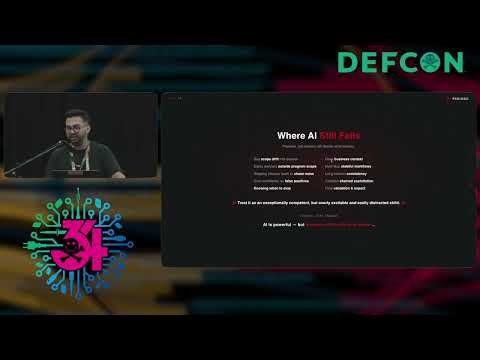
Bug bounty program managers describe how AI is reshaping their report volume, triage workload, scope decisions and severity scoring.
Summary
This panel brings together bug bounty program managers to describe what has changed on the receiving end of the inbox over the past year. The panelists say the challenge has shifted from filtering noise to keeping up with a growing number of valid, more technical reports. AI lowers the barrier to submitting, so reports arrive more often, many are long and hard to reproduce, and some researchers let an AI decide severity without understanding the product. Programs are responding with tiered private programs, lower public payouts, explicit report templates, requests for video proof of concept, and AI-specific scope policies. Several panelists noted that a well-written report no longer signals quality.
The panel was skeptical that CVSS alone can capture severity, since it misses business context that only the company knows. Some teams use internal severity ranges instead, and others use AI to summarize and prioritize incoming reports while still checking the output by hand. For hackers, the advice was to validate and reproduce findings before submitting, explain real business impact, read the scope documents, and avoid low-value best-practice reports unless they feed a larger chain. Time-of-check versus time-of-use bugs and multi-step chains were called promising, and non-deterministic AI features need prompts, logs and request details.
The panelists agreed that bug bounty is not dying. One reported more valid high-severity reports and a raised bounty for those cases, while low-severity bugs that AI finds easily may lose value. They urged engineering teams to stay involved in remediation decisions and pointed to informal networks of program managers as a useful resource.
Materials
Related talks

Bug Bounty Village·21 min
Albin Vattakattu · Ryan Nolette
Follows a single cloud vulnerability report from vague first claim through triage, embargoed vendor disclosure, and public release, then proposes three principles for modern disclosure programs.
Bug Bounty Village·25 min
Pedro Paniago
Walks through a bug bounty hunter's experiment wiring AI into his manual methodology, with the results, limits and practical tips it produced.

Bug Bounty Village·24 min
Shrimant More · Martzen Haagsma
Shows how HackerOne runs its own bug bounty program on its own platform, and what three disclosed reports revealed about the product.