Defeating Physical Intrusion Detection Alarm Wires
Bill Graydon demonstrates defeating supervised alarm wiring in physical intrusion detection systems, bypassing End-of-Line resistors and sensor loops.
Summary
The Insecurity of Supervised Alarm Wiring
Commercial and residential intrusion detection systems rely on supervised electrical circuits to monitor physical door contacts, motion detectors, and vault sensors.
Understanding End-of-Line (EOL) Resistors and Supervision
Bill Graydon explains how alarm control panels measure circuit resistance and voltage drops to detect open circuits, short circuits, and tamper attempts.
Executing Non-Destructive Wire Bypasses
Using basic electrical tools and precision measurement equipment, Graydon illustrates how an intruder can measure loop resistance and splice parallel resistive bridges without tripping the alarm.
Modern Line Security Standards and Active Polling
The presentation outlines physical protection conduits, encrypted digital polling lines, and multi-sensor supervision to secure alarm communication lines.
Related talks

Main Stage·42 min
Mark Omo · James Rowley
Reverse engineers electronic gun safes and commercial digital vaults, demonstrating effortless physical and electromagnetic bypasses across leading brands.
Main Stage·40 min
Dennis Giese · braelynn
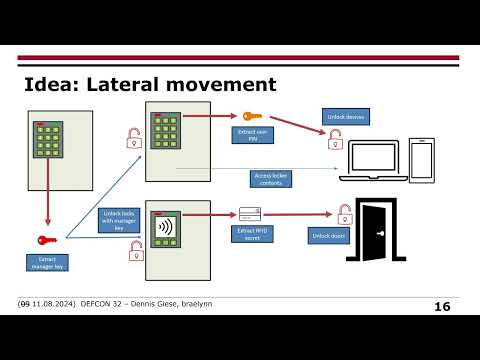
Security evaluation and hardware attack surface analysis of smart electronic lockers and storage cabinets.

Main Stage·43 min
Yaniv Balmas · Lior Oppenheim
Yaniv Balmas and Lior Oppenheim demonstrate reverse engineering KVM switch firmware, subverting the 8051 microcontroller to install an undetectable, persistent hardware keylogger.