Petty Proteins: When Molecules Go Rogue and Why Cyberbiosecurity Matters
Explores how AI-designed proteins and biological vulnerabilities mirror cybersecurity attack vectors, highlighting the emerging field of cyberbiosecurity.
Summary
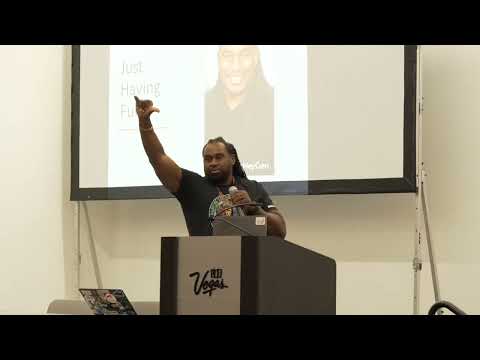
In this pioneering presentation from the Blacks in Cybersecurity Village at DEF CON 33, a doctoral researcher explores the emerging frontier of cyberbiosecurity, examining the intersection of biological sciences, computational pipelines, and digital security threats. Opening at 00:00, the speaker introduces cyberbiosecurity as the discipline tasked with securing synthetic biology infrastructure, DNA synthesizers, and bioinformatics databases against digital tampering.
At 06:03, the speaker contrasts DNA blueprints and RNA messaging with protein execution, explaining that proteins act as the functional molecular "workers" whose behavior governs cellular processes. At 12:02, the talk examines breakthrough deep learning models—such as AlphaFold and ESMFold—that predict complex 3D protein structures within minutes, drastically accelerating research but also introducing potential algorithmic supply chain risks.
At 18:00, the presenter explores hypothetical threat vectors, including poisoned protein folding models, deceptive synthetic payloads, and automated sequence tampering in shared biological repositories. Concluding at 24:00, the speaker calls for proactive defensive research, responsible disclosure protocols, and cross-disciplinary collaboration between security practitioners and computational biologists to safeguard biological data pipelines. (AI summary — Gemini Flash)
Related talks
Blacks in Cybersecurity Village·33 min
Levone Campbell
Explores the dual role of artificial intelligence in scaling hyper-targeted phishing campaigns while powering real-time behavioral defenses.

Biohacking Village·26 min
Mixæl Laufer
Four Thieves Vinegar Collective founder Mixæl Laufer shares open-source medicine projects, decentralized hardware, and grassroots biohacking initiatives.

Biohacking Village·1 hr 29 min
Nina Alli
Biohacking Village Executive Director Nina Alli interviews clinical professionals, patients, and hackers on the future of healthcare security.