Ask the EFF
Where
Talks
HOPE XV
Duration
50 min
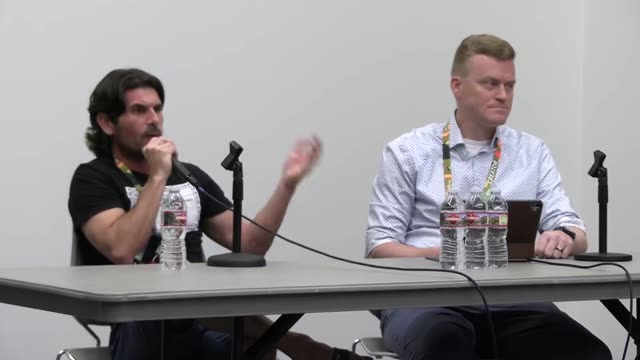
Panelists from the Electronic Frontier Foundation answer audience questions on surveillance, data brokers, and digital rights.
Summary
The session opens with a short history of the Electronic Frontier Foundation, founded in 1990 to defend the rights of internet users, and of its mix of activists, lawyers and technologists. Each panelist then describes their current work. One covers browser privacy tools and a fingerprinting test that shows how a browser can be identified without cookies. Another covers legal counsel for security researchers and challenges to unreliable police technology. A third covers investigations into police surveillance such as cell-site simulators and license plate readers, mostly built on public records requests. The last covers copyright, free expression and mail restrictions in jails.
The audience questions that follow cover a range of surveillance problems. Panelists explain that police can often buy cell-site simulators from private vendors without any formal review, and that the best leverage is local ordinances and procurement rules. They note that phone settings can block forced downgrades to 2G, which such devices use to intercept traffic. Other questions cover privately operated license plate readers that could be used to track people across state lines, data collected by car infotainment systems, and whether federal privacy bills such as EARN IT are still a threat. Questions on legal standing in surveillance lawsuits and on airport screening also come up.
The main takeaway is that the fight is moving toward state and local law, because federal constitutional protections do not reach private actors. Panelists also suggest that concrete, personal examples make privacy problems easier for non-specialists to understand. For individuals, practical steps include using data-broker removal services, checking phone security settings, and documenting harms that could support a later legal claim.
Related talks

Talks·11 min
Eva Galperin
A live question-and-answer session after a keynote covers facial recognition, stalkerware, internships, and surveillance in Latin America.

SecureOurStreets·1 hr
Presenters detail vulnerability discovery and exploitation in PANEL DISCUSSION Automotive Privacy - Differentiator or Pain in the Neck.
Voting Village·28 min
Nate Young · Ryan Macias
Two election officials sort recent election news into real risks and noise, covering foreign interference, federal retreat, voter-roll checks, mail ballots and late rule changes.