Alice & Bob Lose Their Life Savings
Where
Track 1
CactusCon 13
Duration
21 min
Traces a real tech-support scam that drained a retired couple's savings and shows how a trusted-contact habit can stop it.
Summary
Chad Butler walks through the true story of two retired Arizona residents, called Alice and Bob here, who lost nearly $300,000 in a tech-support scam. It began with a fake Microsoft warning on Alice's computer. A caller posing as a federal investigator then told her that her identity was linked to a criminal case and that her accounts would be frozen unless she moved her money. Over several weeks she withdrew cash, mailed it in a box, bought gold bullion for couriers to collect at her curb, and sent funds through a Bitcoin ATM.
Butler breaks down the script: the coached answers for the bank, the secrecy demands, and the pressure that kept her from asking for help. A shipping clerk recognized the address, and the mailed cash was eventually returned, but the scam only fell apart when the caller stopped answering scheduled calls. Police took a report but had little capacity to investigate. Citing FTC data, he notes that people under 60 file more of these reports than older adults, even though older victims lose more per incident. He argues that fear, urgency and authority override rational thinking in anyone.
He introduces the "Gumby Challenge," a habit of talking a suspicious request through with a trusted person before sending money, and asks listeners to be that trusted contact for relatives and friends. He closes with local nonprofit and FTC resources for education and victim support.
Related talks

Ground Truth·28 min
Reanna Schultz
Shows how a three-campaign phishing study measured why users click, and what that means for training programs.
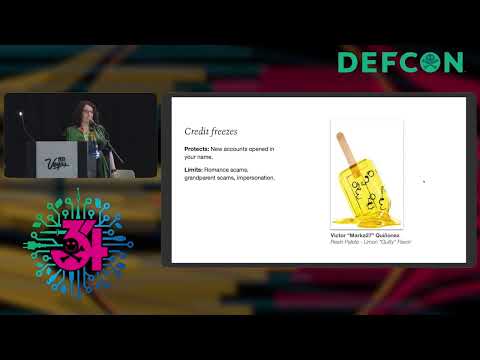
Crypto Privacy Village·28 min
Yael Grauer
Examines where common security advice such as password managers, MFA, credit freezes and VPNs falls short, and what still helps when it does.

Talks·46 min
Tom Van de Wiele
Explores how cheap wireless and cyber pranks could become critical infrastructure attacks and how defenders can test them.