So You Want to Work in Aircraft Cyber Heres what you need to know
Where
Aerospace Village
DEF CON 34
Duration
26 min
Gives cybersecurity professionals a fast overview of the regulations, standards, aircraft systems and skills needed to move into aviation security.
Summary
Two aircraft security practitioners give a fast, frank tour of what someone moving from general cybersecurity into aviation should learn. They start with the regulatory frame: operators need an FAA authorization tied to an information security program, and safety management and continuing analysis requirements fold cyber risk into existing safety work. They then sketch the aviation ecosystem, from onboard functional domains and avionics data buses to ground systems that push software loads and pull aircraft data, with aircraft PKI protecting those updates.
Next they walk through the standards that shape the field, including the RTCA and EUROCAE secure design and risk assessment documents, ARINC specifications and ATA Spec 42 for PKI. They point out that when manufacturers reference a standard in their maintenance instructions, it becomes mandatory for operators. They also contrast the US approach with the EASA Part IS framework. Because operational aircraft cannot be pen tested, research happens in labs and on certified or uncertified ground systems.
The closing section covers the skills that are hard to teach: curiosity, pragmatism, communicating risk to leadership and a structured mindset. The presenters point newcomers to a public IATA compilation of aviation cyber regulations and to the Aerospace Village, and they say a structured training course may follow.
Materials
Related talks

Main Stage·24 min
Nikita · Sparky · Polybius
Gives first-time DEF CON attendees a practical orientation to villages, contests, goons, safety, badges, and how to get involved.

Black Hat·59 min
Don A. Bailey
Presenters detail vulnerability discovery and exploitation in EU 2013 - The M2M Risk Assessment Guide, a Cyber Fast Track Project.
BioHacking Village·29 min
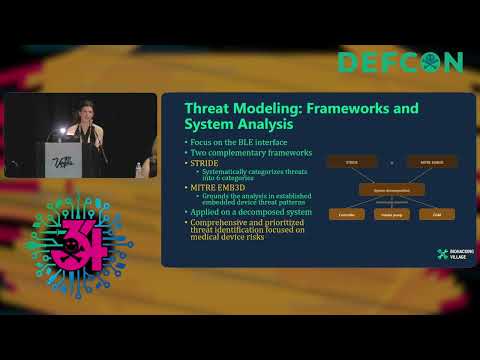
Follows four security students as they analyze a Bluetooth Low Energy insulin pump, from threat modeling to spoofing the pump's advertisements to reach the controller.