A Sleuth's Stories on Detecting and Revealing Large-Scale Research Fraud
Where
Talks
HOPE_16
Duration
52 min
Traces how a volunteer scientific sleuth spots duplicated images and impossible data in published papers across several fields.
Summary
The talk opens with how the speaker, a working scientist, began examining published papers as a side project around 2020. It explains the reporting path: concerns are first posted on PubPeer, then sent to journal editors, whose publishers' integrity teams decide outcomes in a process that can take years.
The middle presents case studies. Reused histology images across treatment groups in Alzheimer's research, including work linked to a senior figure at a major funding institute, appear alongside a rodent vaccine study whose own control data did not support its conclusions. A plastic neck collar study had tables that were identical despite changed labels, and chemistry traces repeated noise across supposedly separate samples. The speaker contrasts simple duplication, found with tools like ImageTwin and Forensically, with subtler patchwork that needs manual matching.
The closing section turns to incentives: high publisher profit margins, paper mills, authorship sold for money, and unpaid peer reviewers. Publishers are described as checking typos more than images. The takeaway is that image screening should happen before publication, and that volunteer sleuths are few compared with the scale of the problem.
Related talks
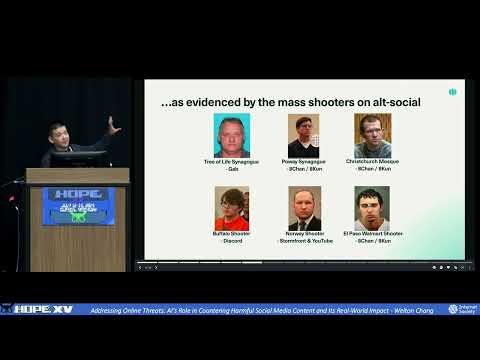
Talks·35 min
Welton Chang
Examines how extremist content on fringe social platforms drives real-world violence and how AI helps analysts sift through it.
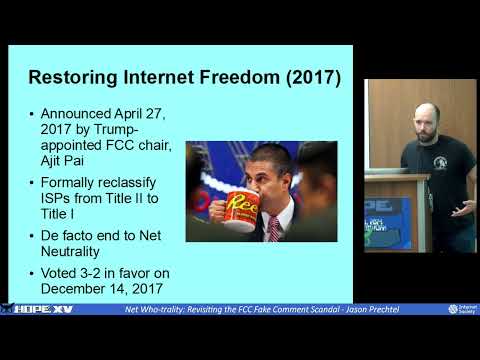
Talks·39 min
Jason Prechtel
Traces how public records requests and server logs were used to identify who submitted millions of fake net neutrality comments.

Packet Hacking Village·29 min
Harish Elavia
Shows how fake LinkedIn profiles can be spotted by combining image forensics, behavioral signals and network graph analysis into one score.